

If you share your life with a cat (and I assume you do, otherwise why would you be here?), there’s something important you need to understand—something most people aren’t told early enough:
Your cat will almost certainly develop kidney disease as they age.
That sounds alarming, I know. But it’s not a reason to panic—it’s a reason to act early.
In a recent episode of Cat Chat I sat down with Dr. Michelle Dulake of Fera Pets to talk about what’s really happening inside your cat’s body over time, and what you can do now to make a meaningful difference years down the road.
Listen to the full conversation.
The Quiet Reality of Feline Kidney Disease
Kidney disease (often called chronic kidney disease or CKD) isn’t something that just “happens” overnight. It develops slowly, silently, and—most importantly—predictably.
As cats age, their kidneys naturally become less efficient. They struggle to filter waste the way they once did. One of the key issues? A buildup of phosphorus (phosphate) in the body.
When the kidneys can’t eliminate phosphate effectively, it begins to accumulate in the bloodstream—a condition called hyperphosphatemia. This sets off a cascade of problems:
- It stresses the kidneys further
- It can trigger hormonal imbalances
- It contributes to tissue damage and mineralization
- And over time, it accelerates kidney decline
In plain English? The kidneys begin to harden, lose function, and eventually fail to do their job.
Why You Don’t Hear About This Soon Enough
Here’s the frustrating part: most cat owners don’t learn about kidney disease until their cat is already showing symptoms.
That’s because veterinary care is often reactive, not proactive. By the time you notice:
- Increased thirst
- More frequent urination
- Weight loss
- Lethargy
…the disease is already underway.
And once it progresses to that stage, management becomes more difficult—emotionally for you and physically for the kitty. We’re talking prescription diets your cat may refuse to eat, medications, and in many cases, subcutaneous fluids at home.
No one signs up for that kind of relationship shift with their beloved cat.
The Case for Starting Early
This is where the conversation shifts—from treatment to prevention (or more accurately, delay and mitigation).
One of the most important strategies? Controlling phosphate levels early.
That can mean:
- Feeding a moisture-rich, low-phosphate diet (wet food is key)
- Avoiding dry food that contributes to dehydration
- Supporting the body with tools that help manage phosphate before it becomes a problem
This is where phosphate binders come into play.
What Are Phosphate Binders (and Why Do They Matter)?
A phosphate binder is something you give your cat that binds to phosphate in the digestive tract—so it gets eliminated in the stool instead of absorbed into the bloodstream.
There are several types:
- Calcium-based binders (common but can raise calcium levels too much)
- Aluminum-based binders (effective but not ideal long-term due to toxicity concerns)
- Newer, non-metal options (gentler, more supportive)
Dr. Dulake highlighted a newer ingredient called chitosan (CIN)—a naturally derived compound that binds phosphate without the risks associated with calcium or metals.
It’s not as aggressive as traditional binders—but that’s exactly the point. It’s designed to be supportive over the long term, not just a last-resort intervention.
A Smarter, Softer Approach to Support
I want to spotlight something I genuinely respect: the philosophy behind Fera Pets.
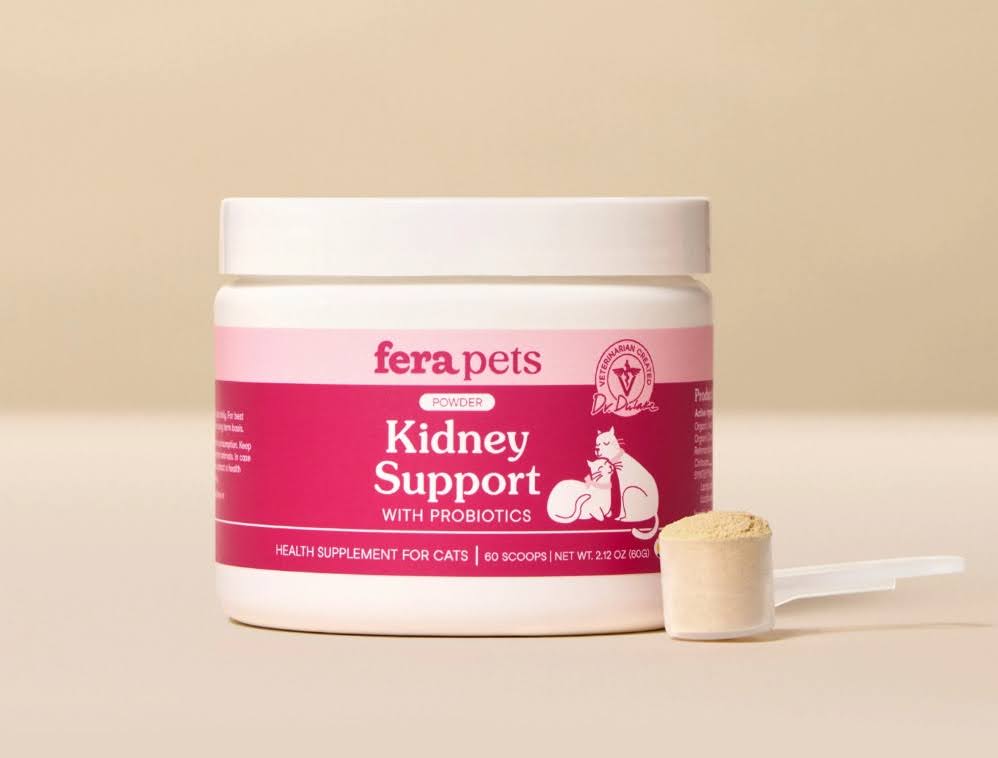
Their Kidney Support formula incorporates:
- Chitosan for phosphate binding
- A clinically studied probiotic shown to support kidney markers
- Carefully chosen botanicals
- A palatable base (chicken bone broth—because yes, cats are that picky)
The goal isn’t to “fix” kidney disease once it’s advanced. It’s to support kidney health before things go sideways.
And perhaps most importantly—it’s something cats will actually eat.
Because let’s be honest: if your cat refuses it, it doesn’t matter how brilliant the formulation is.
 The Bigger Picture: Food as Medicine (or Not)
We can’t talk about kidney health without talking about diet.
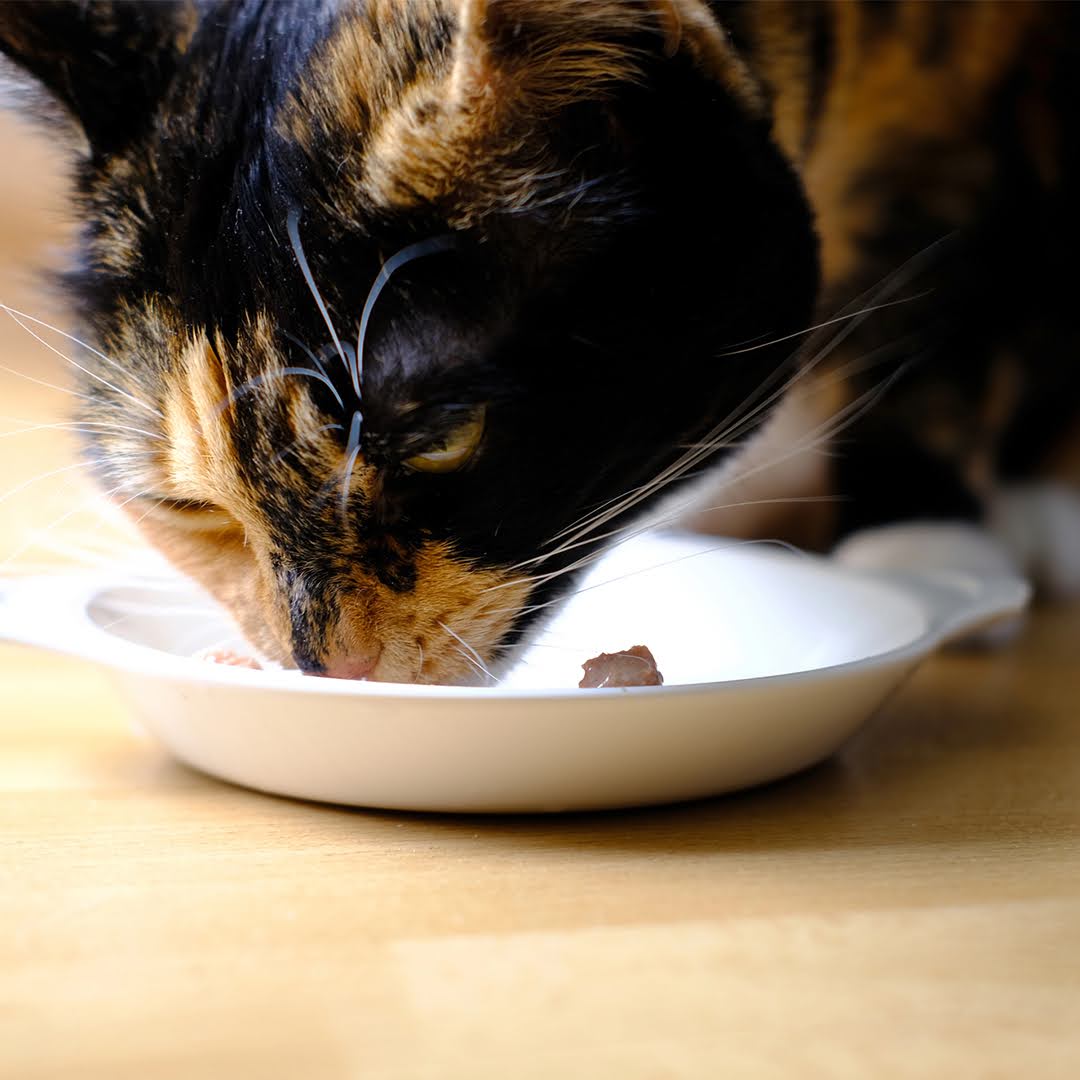
Cats are biologically designed to get most of their hydration from food. That means:
- Wet food = supportive
- Dry food = dehydrating
Chronic dehydration puts extra strain on the kidneys over time. It’s one of the many reasons dry food can contribute to long-term health issues—not just kidney disease, but diabetes as well.
If your cat is already showing signs of kidney decline, switching to wet food isn’t optional—it’s essential.
But if your cat is young and healthy? That’s your opportunity to get ahead of the curve.
What This Really Comes Down To
You don’t need to feel guilty if you’ve lost a cat to kidney disease. Most of us weren’t told what we needed to know.
But now you do know.
And the takeaway is simple:
- Kidney disease is incredibly common in cats
- It develops slowly—but starts earlier than you think
- You can take small, consistent steps to delay its onset
- And those steps can make a profound difference in your cat’s quality of life
Imagine your cat staying vibrant, comfortable, and engaged—not just into their teens, but beyond.
That’s the goal.
If you want to understand this more deeply—and hear Dr. Dulake explain it in her clear, practical way—I encourage you to listen to the full episode.
Because when it comes to your cat’s kidneys, the best time to help…
is long before they start asking for it.