


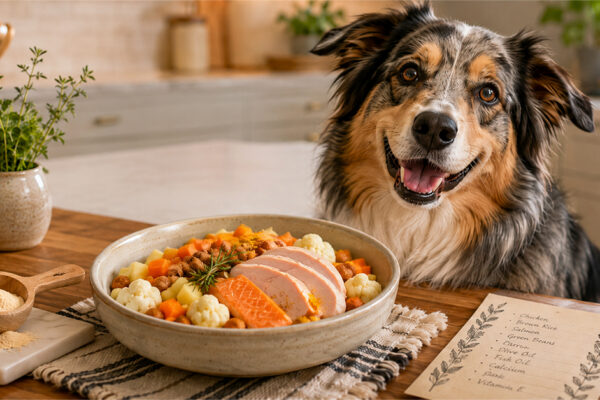
Cooking for your dog feels like the ultimate act of love. You choose the meat, chop the vegetables, stir the pot and serve something that looks far more appealing than anything that came out of a bag. Then your dog licks the bowl so enthusiastically that you think: Clearly, I am brilliant.
But a meal can be delicious, wholesome-looking and still be nutritionally incomplete.
That is exactly what I discussed with veterinary nutrition experts Dr. Joe Wakshlag and Dr. Justin Shmalberg, co-founders of Integrative Veterinary Innovations (IVI), in a recent DOG TALK® episode. Listen to the full episode.
Rotisserie Chicken Is Not a Diet
I have known people who feed their dogs mostly rotisserie chicken. My beloved godmother, Joan Rivers, occasionally shared Ding Dongs with her little dogs, so rotisserie chicken may sound positively virtuous by comparison.
It is not.
Chicken provides protein and calories, but not everything a dog needs to remain healthy. A meat-heavy homemade diet can be deficient in calcium, zinc, vitamin B12, vitamin D and other essential nutrients. Those deficiencies may not announce themselves immediately. Your dog can appear perfectly fine while problems quietly develop.
Calcium is one of the clearest examples. Meat is naturally low in calcium, yet calcium is essential for bones and many metabolic functions. Puppies and kittens are especially vulnerable, but adult and senior dogs are not immune. Justin described a 14-year-old dog who had eaten an unbalanced homemade diet for years and developed fractures related to inadequate calcium and vitamin D. The correction was relatively simple. The tragedy was that the deficiency had gone unnoticed for so long.
“Fresh” Does Not Automatically Mean “Balanced”
We tend to think in terms of ingredients: chicken, beef, sweet potato, broccoli, rice. Those may all be perfectly good foods. But nutrition is not simply a collection of attractive ingredients.
A complete diet has to supply the right nutrients in the right proportions.
Throwing more things into the pot is not necessarily the answer, either. Joe and Justin described the “kitchen sink” approach—adding a little of everything and hoping it somehow adds up. A proper recipe must account for vitamins, minerals, essential fatty acids and the relationships between nutrients.
This is where IVI quietly fills an important gap. Its recipes and balancing products were developed from decades of clinical experience with home-prepared diets. IVI Blend supplies commonly missing nutrients and also includes selected botanicals, including maitake mushroom and licorice root, along with plant-based digestive enzymes. A separate calcium product provides the calcium that meat-based recipes typically lack.
That does not mean sprinkling a supplement onto random leftovers magically turns them into ideal dog food. The recipe, quantities and supplements have to work together.
Home Cooking Can Be Especially Valuable for a Sick Dog
When a dog is diagnosed with cancer, kidney disease, pancreatitis, gastrointestinal disease or bladder stones, people often want to take control of the food bowl. I understand that completely. Feeding is one of the most loving, tangible things we can do.
But fear can lead people toward extreme ideas: no carbohydrates, only protein, nothing but chicken, or a recipe pulled from an unqualified source online. A dog undergoing chemotherapy or coping with disease may have greater nutritional demands, not fewer.
A carefully designed homemade diet can offer flexibility, palatability and control over ingredients. It can also be adjusted when a protein source is not working or a dog’s appetite changes. But food is not a magic wand. A diet for a medical condition should be coordinated with your veterinarian, monitored with appropriate testing and personalized when the condition is complicated.
The Goal Is Confidence, Not Perfection
Veterinarians often steer people toward commercial food because it removes one enormous worry: nutritional deficiency. That is reasonable. But more people now want to cook, and they deserve better guidance than “don’t do it.”
With a professionally formulated recipe, the correct balancing ingredients and veterinary oversight when needed, home cooking does not have to be frightening or impossibly complicated. You can enjoy feeding your dog something you prepared yourself without accidentally creating a long-term nutritional problem.
Love belongs in the bowl. So do calcium, vitamins, minerals, fatty acids and everything else your dog cannot ask you for.
I am delighted to have IVI supporting DOG TALK® because Joe and Justin are helping people cook with both love and nutritional common sense. Listen to the full episode to hear when a standard recipe may be enough—and when your dog needs personalized guidance.