


I am a pet foodie.
That does not mean I am anti-commercial pet food. Quite the opposite. It means I am fascinated by pet food, suspicious of pet food marketing, and deeply interested in helping pet owners sort actual nutrition from nutritional theater.
Because let’s be honest: trying to choose a dog or cat food today can feel like wandering through a very expensive maze while everyone shouts, “Don’t go that way! Your dog will explode!”
One company says kibble is poison. Another says their fresh food will save your dog’s life. Someone on the internet calls herself a “certified animal nutritionist” after taking an online course with a pretty certificate and a PayPal button. Meanwhile, pet owners are standing in the aisle — or scrolling at midnight — wondering whether they are loving their animals enough.
This is why I was so happy to talk with Stephanie Clark, PhD, a board-certified companion animal nutritionist and Vice President of Nutrition at BSM Partners. In other words: an actual scientist. Not a person with a weekend certificate and a ring light.
🎧 Listen to the full episode HERE
And one of the first things we talked about was that problem: the explosion of people calling themselves pet nutrition experts.
The trouble is that many “certifications” are not regulated. Anyone can create a course, give an exam, charge a fee, and hand out a nice little piece of paper. That does not make someone qualified to advise you on your dog’s pancreatitis, your cat’s kidney disease, or whether a food is nutritionally appropriate.
It makes them good at marketing.
And marketing, unfortunately, is where much of the pet food world has gotten very muddy.
Fear sells. “Commercial pet food is toxic” sells. “My dog got cancer, so I created a food that prevents cancer” sells. But a compelling origin story is not the same thing as science.
Commercial pet food does not “cause cancer” in dogs and cats in the simplistic way some fear-mongering brands would like you to believe. Cancer is complicated. Genetics matter. Environment matters. Age matters. Breed matters. You cannot point to a bowl of kibble and declare it the villain because that makes for a good ad.
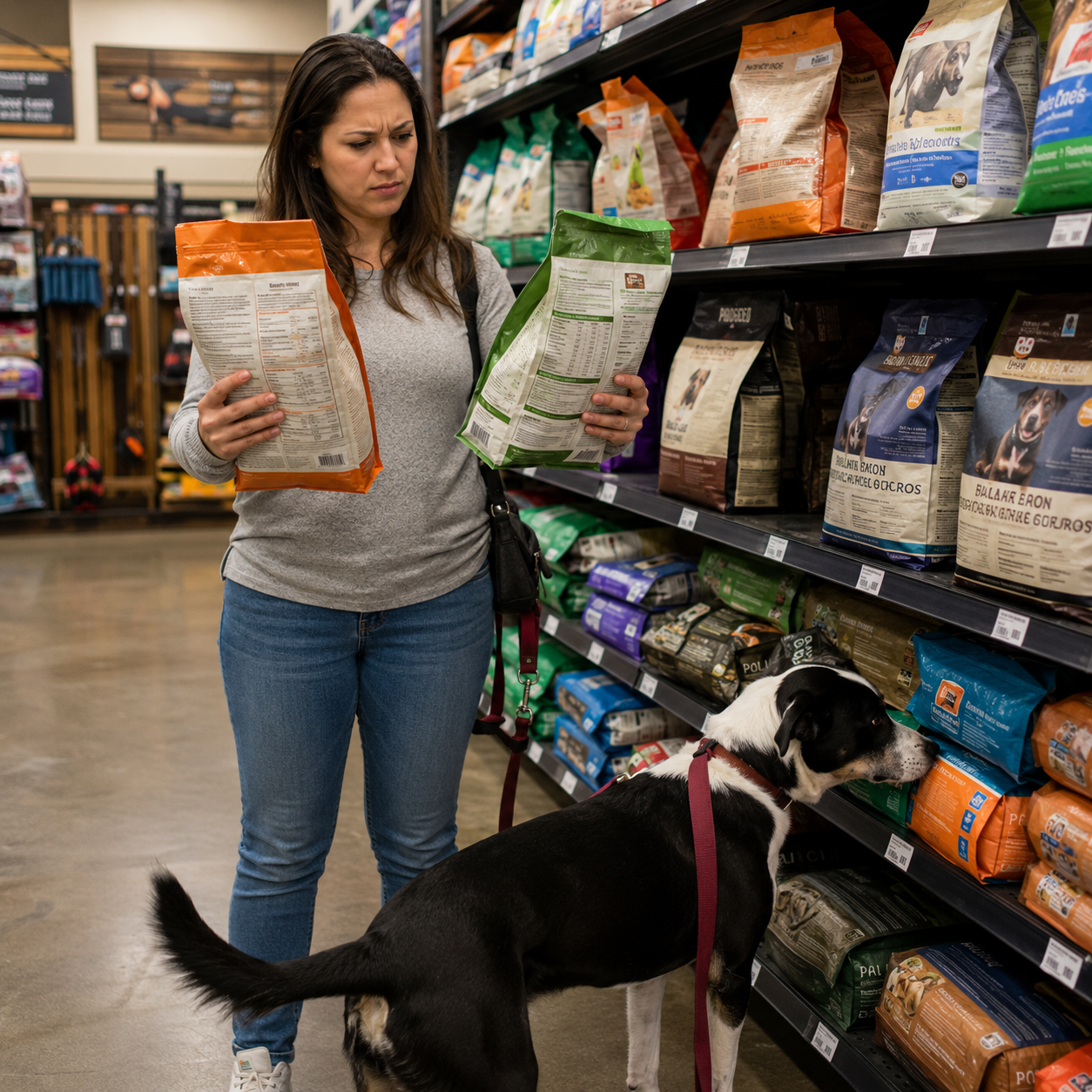 That does not mean all pet foods are equal. They are not. It means pet owners need better questions, not scarier slogans.
One of the most important questions is: Has the finished product actually been tested?
It is one thing for a company to say, “We added probiotics,” or “This food supports the microbiome,” or “We included taurine.” Lovely words. Very shiny. But what matters is whether the ingredient survives processing, whether the final food contains the amount claimed, and whether that amount is meaningful for the animal eating it.
Stephanie made the point clearly: if a company has done its due diligence, it should be able to answer. They should be able to say what they put in the food, how they tested it, and what the finished product contains.
That is very different from tossing fashionable words on a bag.
The same goes for “research-backed.” Research is a word that gets thrown around like confetti. But was it good research? Was the study properly designed? Were there enough animals? Was there a control group? Did the results actually support the claim being made?
And then there is AAFCO, which many pet owners see on a label and interpret as a gold star.
It is not a gold star. It is more like a baseline. A food can meet AAFCO standards and still not be the most thoughtful, carefully tested, or ideal food for your particular dog or cat. Stephanie explained that standard feeding trials look at limited parameters — whether animals survive and maintain certain basic measures — but that does not necessarily tell us everything we should want to know about long-term health, ideal body condition, digestibility, or suitability for different life stages.
So where does that leave us?
It leaves us needing to be smarter, calmer consumers.
Ask who formulated the food. Ask whether a veterinary nutritionist was involved. Ask whether the company tests the finished product. Ask whether they can provide a nutrient analysis. Ask your veterinarian, and if your vet is not deeply trained in nutrition, ask whether they can help you reach someone who is.
And please, do not assume food that looks like something you would feed a toddler is automatically better for your dog. Pretty peas and visible carrots may make you feel better. That does not mean they are more digestible or nutritionally superior. Dogs are not tiny people in fur coats, even when they act like entitled roommates.
My own view has always been practical: feed the best food your animal does well on, that you can afford, from a company whose practices you trust. For dogs, I like the idea of combining high-quality commercial food with some fresh food where appropriate. For cats, I remain firmly in the wet-food camp because they are obligate carnivores and “kitty crack” is a conversation for another day.
The bigger point is this: don’t let fear make your decisions for you.
Pet food should not be a loyalty test. It should not be a guilt trip. It should be a thoughtful choice based on science, transparency, your animal’s needs, and a little common sense.
Listen to the full episode with Stephanie Clark, PhD, for a clear-eyed look at the crowded, confusing, often ridiculous world of pet food — and how to find the facts hiding underneath the marketing glitter.